
Look • Compare • Identify
Tree Leaf Identification Board
A hands-on tree identification activity for Scouts
Get Scouts outdoors and looking closely at the trees around them with the Scouts Bushcraft Tree Leaf ID Board.
This simple wooden identification board is designed to make tree identification a practical, hands-on activity. The central viewing hole allows Scouts to hold a real leaf against the board and compare its shape, size and features with the engraved examples.
It is ideal for Scout camps, bushcraft sessions, nature walks, woodland activities and outdoor skills days.

🌳 How the Tree Leaf ID Board Works
The board features a selection of common UK tree leaves engraved into the surface.
The large central hole can be used to position a real leaf against the board while Scouts compare it with the examples around the board.
Encourage Scouts to look at:
Leaf shape, Leaf size, Leaf edges, Number and arrangement of lobes, Leaf veins, Leaf arrangement on the twig, Leaf colour, The tree's bark and overall shape, Where the tree is growing.
The aim isn't simply to find the answer — it's to observe, compare and work it out.
🔎 Look • Compare • Identify
Ask Scouts:
What can you see? - What is different? - Which leaf looks most similar? - What other clues can you find on the tree?
This turns a simple identification exercise into an outdoor observation challenge.
🏕️ Scouts Bushcraft Activity Tree Leaf Detective
Take the board outside and give each Scout or patrol a challenge.
Find a tree.
Collect a suitable fallen leaf where possible.
Place the leaf over the identification area.
Compare it with the engraved leaves.
Look at the tree for additional clues.
Decide which tree you think it is.
Check your identification using a tree guide or suitable identification app.
Move on and find another species.
Patrol Challenge
Give each patrol a set amount of time to identify as many different trees as possible.
For each tree they identify, they could record:
Tree: ____________________
Leaf shape: ____________________
Bark: ____________________
Where found: ____________________
How confident are you? ⭐ ⭐ ⭐
This encourages Scouts to explain how they identified the tree rather than simply guessing its name.
🍃 What Trees Can You Find?
The board includes examples of common tree leaves such as:
Oak, Ash, Beech, Birch, Hazel, Hawthorn, Sycamore, Field Maple, Alder, Lime, Sweet Chestnut, Rowan, Elder, Willow, Hornbeam, Holly, Poplar, Horse Chestnut, Blackthorn,Yew
Tree species can vary depending on where you are, so encourage Scouts to look at the trees actually growing around them.
🌿 Bushcraft Connection
Tree identification is an important foundation for many bushcraft skills.
Once Scouts can recognise trees, they can begin to explore:
Natural tinder - Fire-lighting materials - Different types of wood - Carving and woodworking - Useful natural materials - Tree folklore and traditional uses - Seasonal changes - Woodland habitats - Wildlife associated with different trees
The activity can therefore become the starting point for a much wider Scouts Bushcraft woodland session.
🪵 Make Your Own Tree ID Board
We've made the laser-cut design available FREE for Scout Leaders and bushcraft instructors.
You can download the file and use it to make your own board with a laser cutter.
FREE LASER FILE
Download the Scouts Bushcraft Tree Leaf ID Board
[DOWNLOAD THE FREE LASER FILE SVG] [DOWNLOAD THE FREE LASER FILE XF]
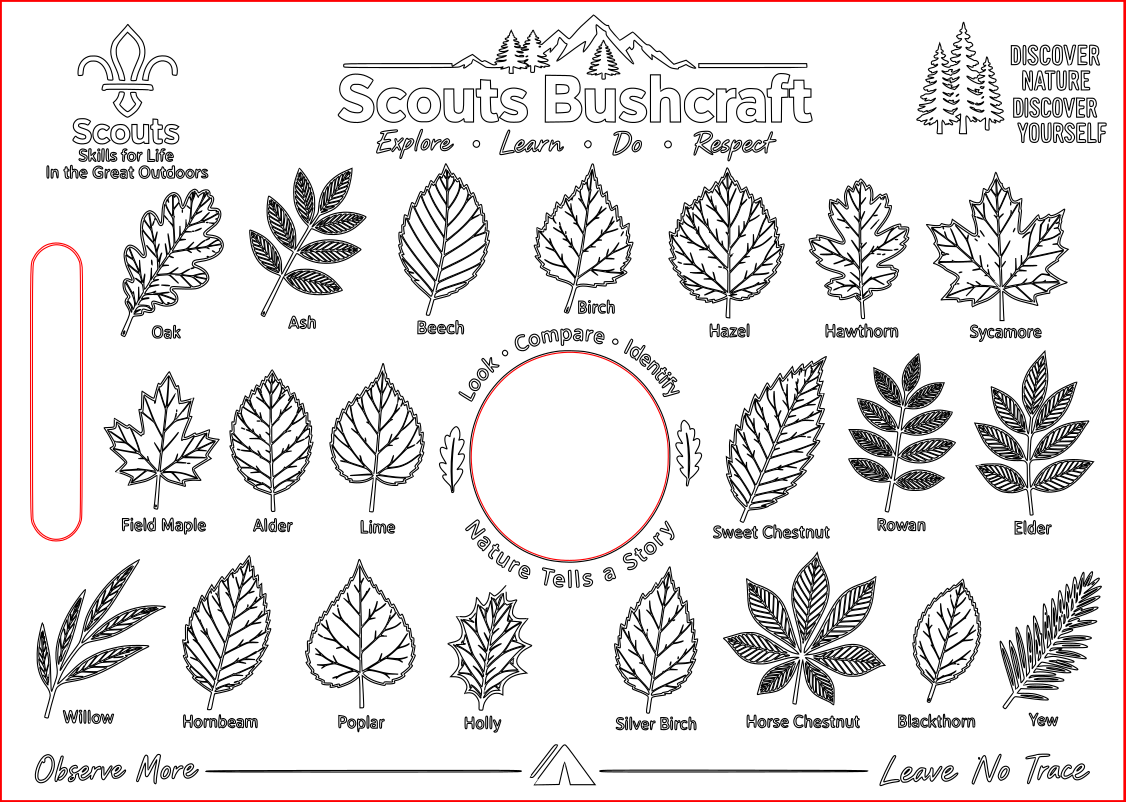
The design is intended for A4 landscape material and includes the board outline, handle slot and central identification hole.
You can make the board from suitable laser-cutting material such as plywood or other appropriate sheet material compatible with your laser cutter.
Laser Cutting
Before cutting, check your laser manufacturer's recommended settings for your chosen material.
The supplied XS design uses:
Red: through-cut lines
Black: engraving artwork
A4 landscape: 297 × 210 mm
Always test-cut a small section first and check the finished board for strength and safe edges.
⚠️ Outdoor Activity Safety
When running the activity with young people:
- Follow your normal Scouting safety procedures and risk assessment.
- Use fallen leaves where practical rather than unnecessarily removing leaves from living trees.
- Do not eat or taste unidentified leaves, berries, fungi or other natural materials.
- Be aware of poisonous plants and irritant species.
- Wash hands after handling leaves and woodland materials.
- Take care around roads, water, steep ground and other hazards.
- Adapt the activity to the age, ability and needs of your group.
The board is an identification aid, not a substitute for a recognised tree identification guide.
🌲 Take It Into the Woods
The best way to learn trees is to get outside and look at them.
Take the Scouts Bushcraft Tree Leaf ID Board on your next woodland walk and challenge Scouts to discover how many different trees they can find.
Look closely. Compare the clues. Identify the tree.
Frequently Asked Questions
What is the Scouts Bushcraft Tree Leaf ID Board?
The Scouts Bushcraft Tree Leaf ID Board is a hands-on outdoor learning tool designed to help Scouts identify common UK trees by comparing real leaves with engraved leaf examples.
How do you use the Tree Leaf ID Board?
Find a suitable fallen leaf and place it over the central identification area. Compare its shape, size, edges and veins with the engraved leaves on the board. Scouts can then look at the tree, bark and surrounding clues to help confirm their identification.
What age group is the activity suitable for?
The activity can be adapted for Squirrels, Beavers, Cubs, Scouts, Explorers and adult Scout Leaders. The level of identification and additional information can be changed to suit the age and ability of the group.
Is the Tree Leaf ID Board suitable for Scout camps?
Yes. The board is designed as an outdoor activity and can be used during woodland walks, bushcraft sessions, camps, nature activities and outdoor skills days.
What trees are included on the board?
The design includes examples of common UK tree species including Oak, Ash, Beech, Birch, Hazel, Hawthorn, Sycamore, Field Maple, Alder, Lime, Sweet Chestnut, Rowan, Elder, Willow, Hornbeam, Holly, Poplar, Horse Chestnut, Blackthorn and Yew.
Can I make my own Tree Leaf ID Board?
Yes. The Scouts Bushcraft laser-cut file is available to download for free. You can use it with a suitable laser cutter to make your own board.
What size is the laser-cut file?
The board is designed for A4 landscape material, approximately 297 × 210 mm. But could be used for A3.
What material can I use?
A suitable plywood or other laser-compatible sheet material can be used. Always check your laser cutter manufacturer's recommended settings and test the material before cutting the complete board. 3mm purch ply works well.
Is the laser file really free?
Yes. The Scouts Bushcraft Tree Leaf ID Board file is provided as a free resource for Scout Leaders, instructors and outdoor educators.
Can I use the board for a woodland identification challenge?
Absolutely. Give each patrol or small group a set amount of time and challenge them to find and identify as many different tree species as possible.
Should Scouts pick leaves from trees?
Should Scouts pick leaves from trees?
Is the board a complete tree identification guide?
No. It is an activity and identification aid. Encourage Scouts to use additional field guides and reliable identification resources when confirming species.
What other bushcraft activities can follow tree identification?
Tree identification can lead into activities covering woodland ecology, natural tinder, fire lighting, wood identification, carving, traditional tree uses, tracking and wildlife identification.
My Links
Scouing Links
Location: Essex