
Discover the Versatility of Pine Trees
Pine Tree Identification & Bushcraft Uses for Scouts
Pine trees are excellent trees for Scouts to learn to identify because they provide a range of useful natural materials for fire lighting, campcraft, shelter building and woodland skills.
Fire Lighting
Utilize resin-rich pine wood for efficient fire-starting, perfect for bushcraft enthusiasts.
Shelter Building
Use straight pine branches for constructing sturdy natural shelters and camp structures.
Identifying a Pine Tree
Common name: Pine
Scientific name: Pinus species
Family: Pinaceae
Pines are evergreen conifers, meaning they keep their needle-like leaves throughout the year.
Look for these features:
- Needles: Long, thin needles growing in bundles.
- Cones: Woody cones containing pine seeds.
- Bark: Usually scaly, plated or deeply textured on older trees.
- Shape: Often a tall, straight trunk with branches arranged around it.
- Resin: Sticky, strongly scented resin may be found around damaged areas.
- Evergreen: Pine keeps its needles throughout the seasons.
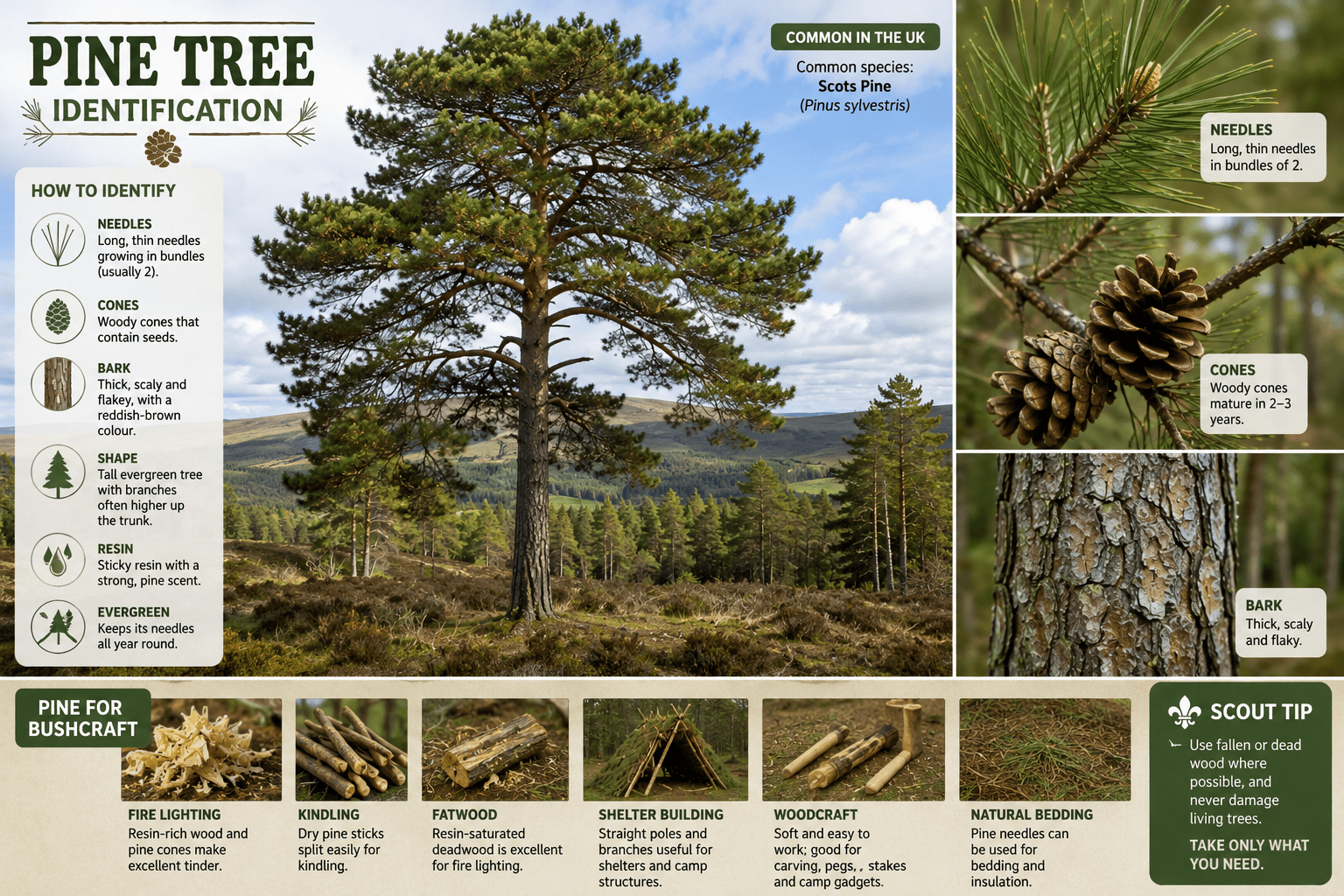
Key Identification Features of Pine Trees

Needles
Long, thin needles grouped in bundles of 2–5, depending on the species, are a hallmark of pine trees.
Pine needles are useful for woodland identification activities and can be collected from the ground for certain campcraft activities such as a tinder.
They can also provide a good opportunity to teach Scouts about evergreen trees, seasonal changes and responsible use of natural materials.
Cones
Pine cones are a useful natural material for Scout bushcraft and campcraft. Once dry, they can be collected from the ground and used in a variety of activities.
- 🔥 Fire lighting: Dry pine cones can be used as tinder or kindling and are useful for teaching fire-lighting skills.
- 🪵 Campcraft: Cones can be incorporated into natural craft projects and woodland displays.
Scout Bushcraft Tip: Collect cones that have naturally fallen to the ground rather than picking them from living trees. Only collect where permitted, and leave plenty behind for wildlife.


Bushcraft Uses of Pine
Pine trees offer a wealth of resources for bushcraft enthusiasts, from fire lighting to shelter building.
Fire Lighting
🔥 Fire Lighting
- Dry pine wood makes useful kindling.
- Resin-rich wood can burn readily and is useful for fire-lighting demonstrations.
- Fatwood from resin-saturated deadwood can be an excellent natural fire starter.
- Dry pine cones can be used as tinder and kindling.
Woodcraft
🪵 Woodcraft
Pine is relatively soft and easy to work, making it suitable for:
- Feather sticks
- Tent pegs
- Stakes
- Simple camp gadgets
- Carving projects
- Practice with bushcraft tools
Shelters
🏕️ Shelter Building
Suitable fallen pine branches and poles can be used for natural shelters, camp structures and lashing practice.
Natural Materials
🌿 Natural Materials
Pine needles and fallen branches can provide useful materials for:
- Natural bedding
- Shelter insulation
- Woodland craft
- Tree identification activities
Scout Woodland Skills
🧭 Scout Woodland Skills
Pine is an excellent tree for teaching Scouts to recognise:
- Needles growing in bundles
- Woody cones
- Pine bark
- Resin
- Evergreen growth
♻️ Scout Bushcraft Principle
Use fallen or dead wood where possible. Never damage a living tree unnecessarily. Take only what you need and leave enough for wildlife and the woodland.
Pine gives Scouts an opportunity to practise fire lighting, woodcraft, shelter building, identification and responsible use of natural resources.
Other Links
Scouing Links
Location: Essex